Behind the Walls: IRID at the Affordable Art Fair, Melbourne
Exhibitions
Behind the Walls
You photographed a work at the fair and looked it up that night. Here is what stood behind it, and why five photographers who look nothing alike shared one stand.
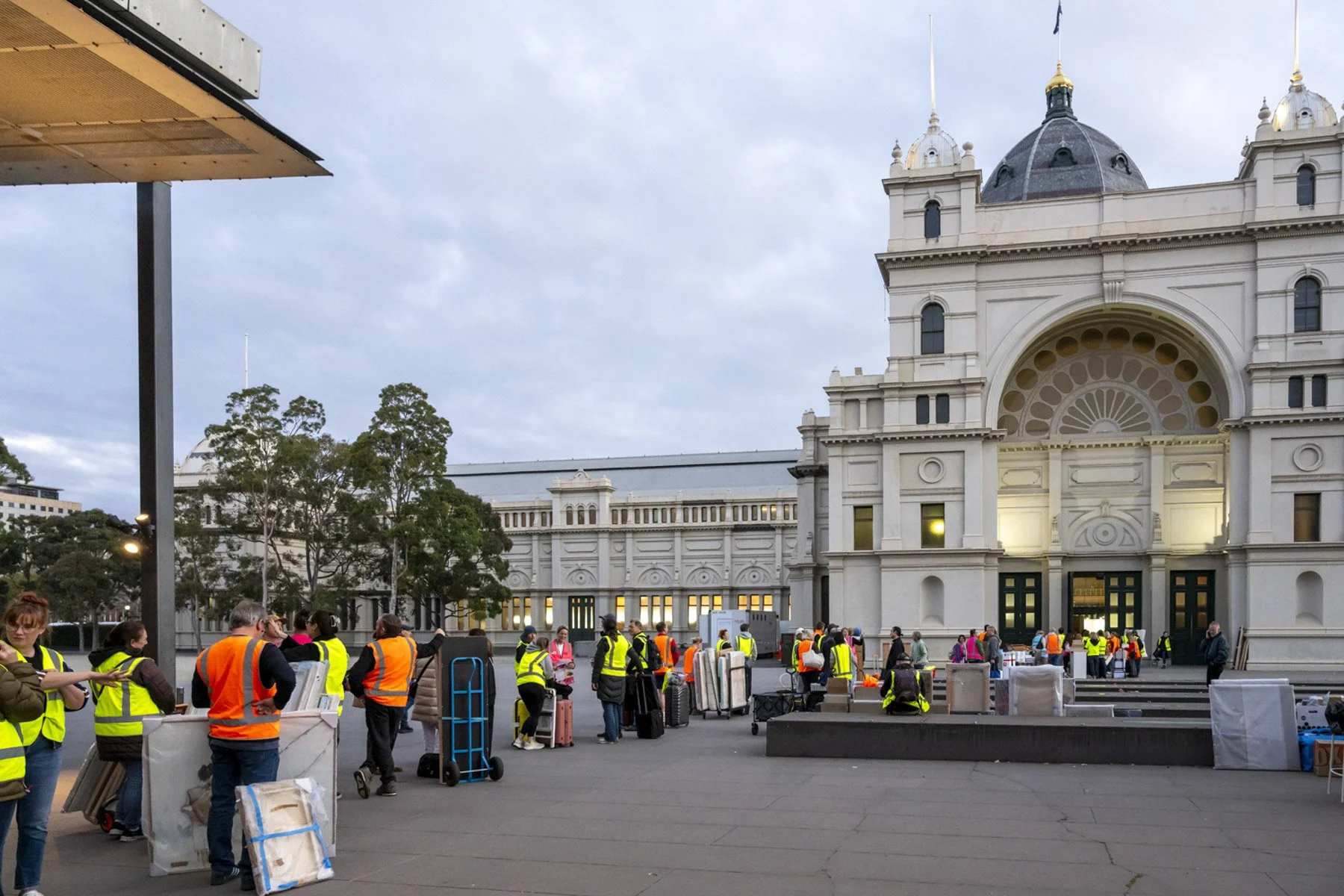
At five in the evening the Royal Exhibition Building belongs to the people building the fair. Tomorrow morning it belongs to the public.
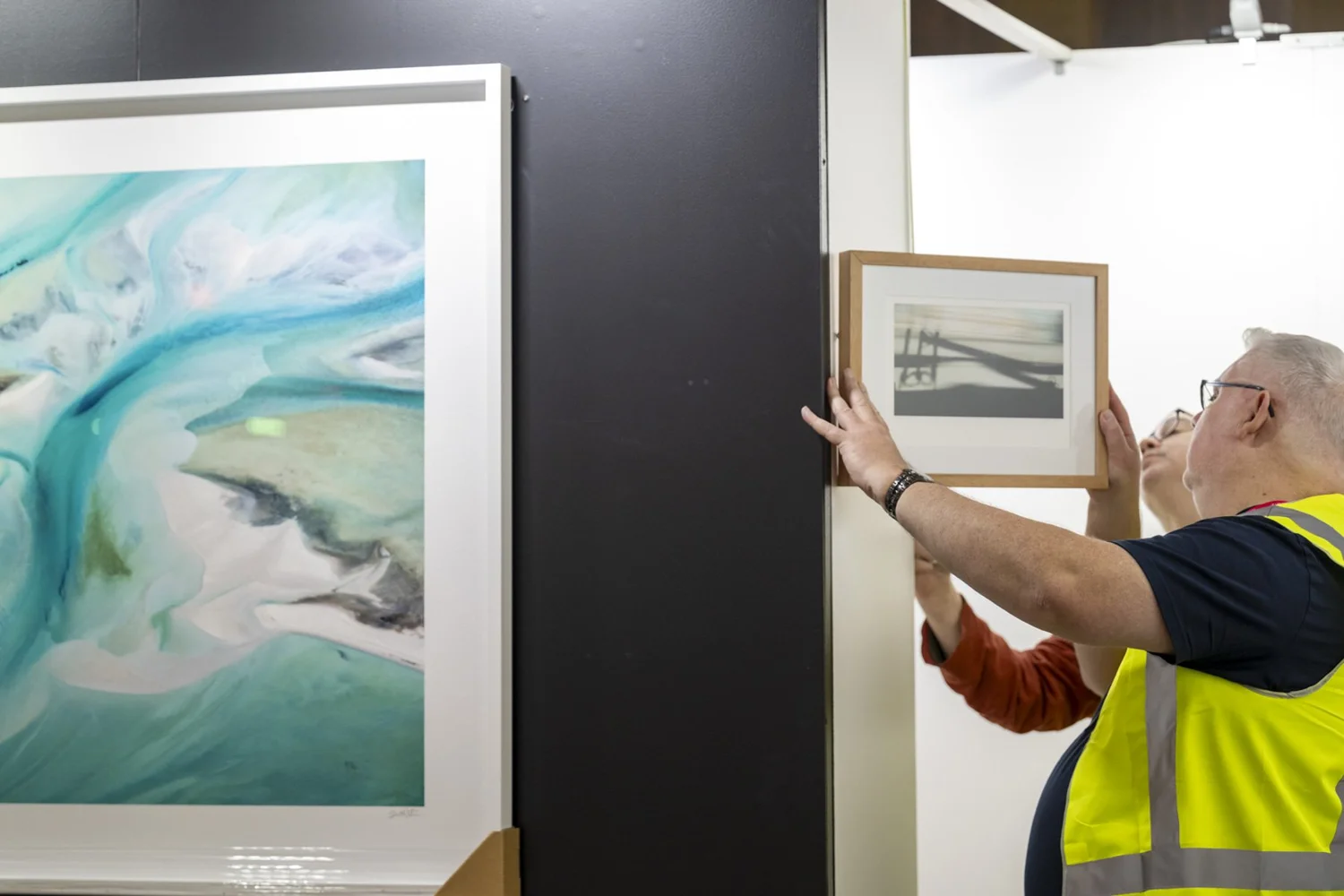
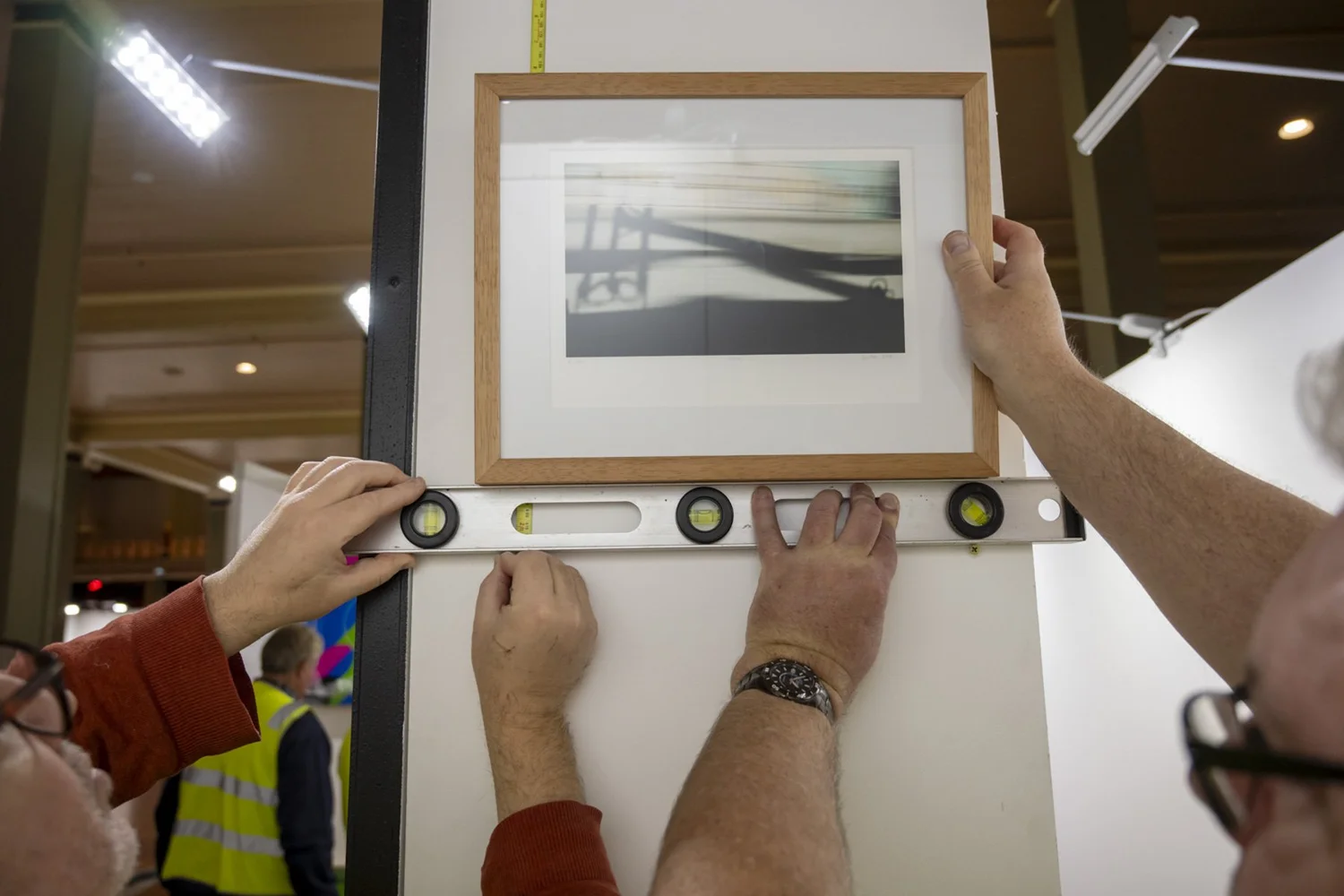
Under the dome there are galleries, and crates, and the particular quiet of people concentrating. A spirit level set down. A drill somewhere. A voice three stands over asking whether anyone has a spare hook. Our walls are up and bare. The work is still wrapped.
Somewhere in that stack is the first thing a stranger will ever see of IRID. The clock on deciding what it is runs out at the door in the morning.
This was our first Affordable Art Fair: Melbourne, 2026. Most of what decided whether it worked happened before a single picture went on a wall, and almost none of it shows in the photographs that come out afterwards.
What a visitor never has to think about
The visible work is the artists' work. Our first job, months out, was making sure every piece we brought was exactly what we said it was.
That sounds like a formality. It was the most labour-intensive thing we did. Every print on the stand is a limited edition: a fixed number, counted across all sizes, and never reissued once it closes. Every one is signed by the artist, by hand, and numbered.
We went through it piece by piece with each of our photographers rather than taking any of it on trust. A fair is the one place a collector can stand in front of a photograph, meet the person who represents it, and ask them directly. Is this really an edition, and what stops you printing more?
Is this really an edition, and what stops you printing more?The question a fair invites
We wanted the answer ready, true, and identical every time it was asked. Getting there took months.
The two-thirds nobody photographs
Ask someone outside the trade how a gallery prepares for a fair and they will describe framing and hanging. Framing and hanging is only the last third, and the rest, which nobody photographs, was the part that surprised us.
Every work on the wall has to exist online already, with the right edition and the right price, because this is how people buy at a fair now. They photograph a piece, stand in front of it for a minute, and look it up on their phone at eleven that night. If the website is not ready, the sale quietly does not happen and you never know it was there.
So the website came first, before a single frame was wrapped. The marketing came next, because a stand nobody came looking for is a quiet stand. After that, the flyer, which is often the one thing a visitor finds in their bag a week later, after they have forgotten the name of every gallery they liked.
Next came the price lists, the labels, the QR codes that have to open the right page, the card reader, the insurance, and the plain physics of moving framed glass between two cities without a corner chipping. It is unglamorous work, and it decides whether the art is seen or missed.
Stand A7
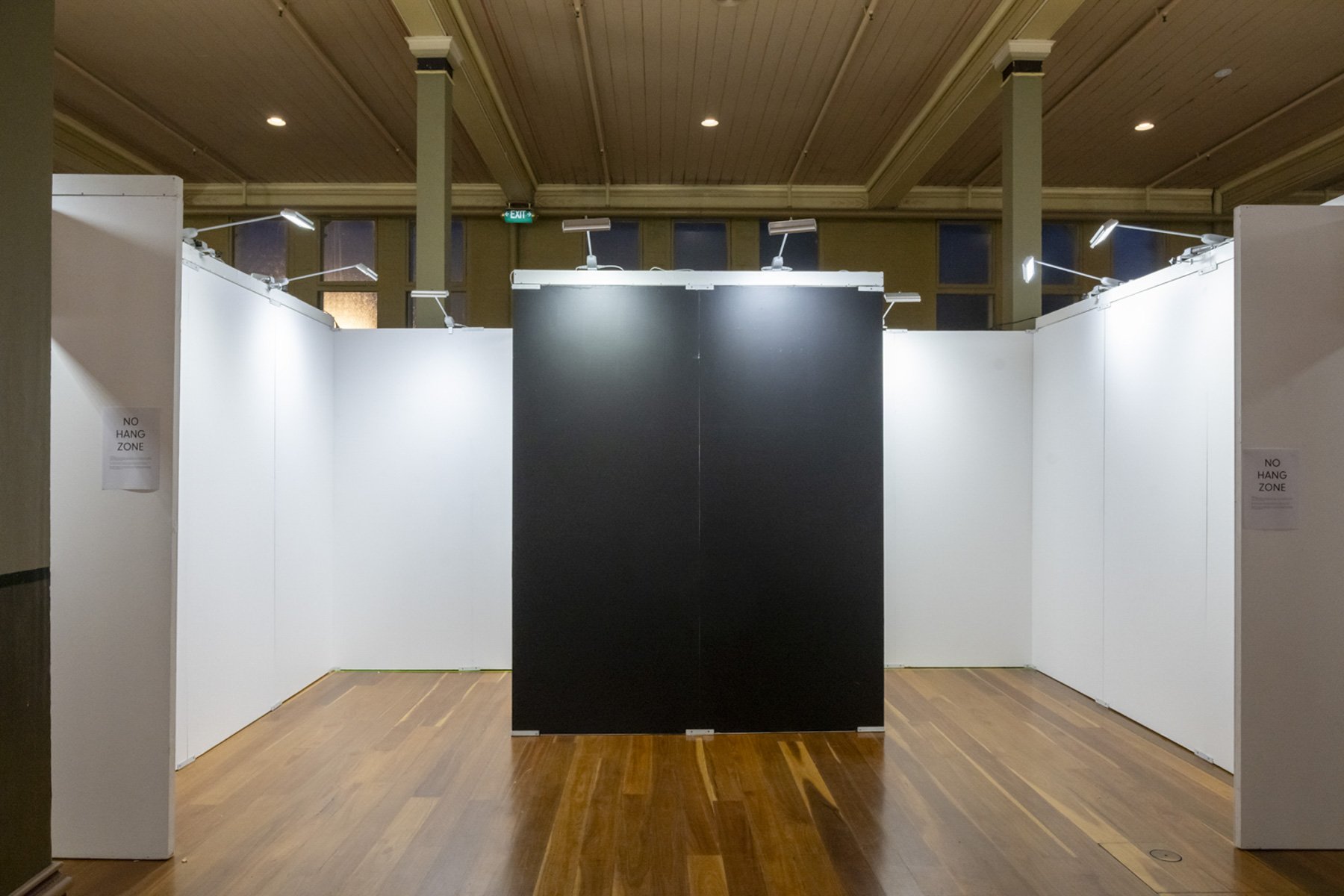
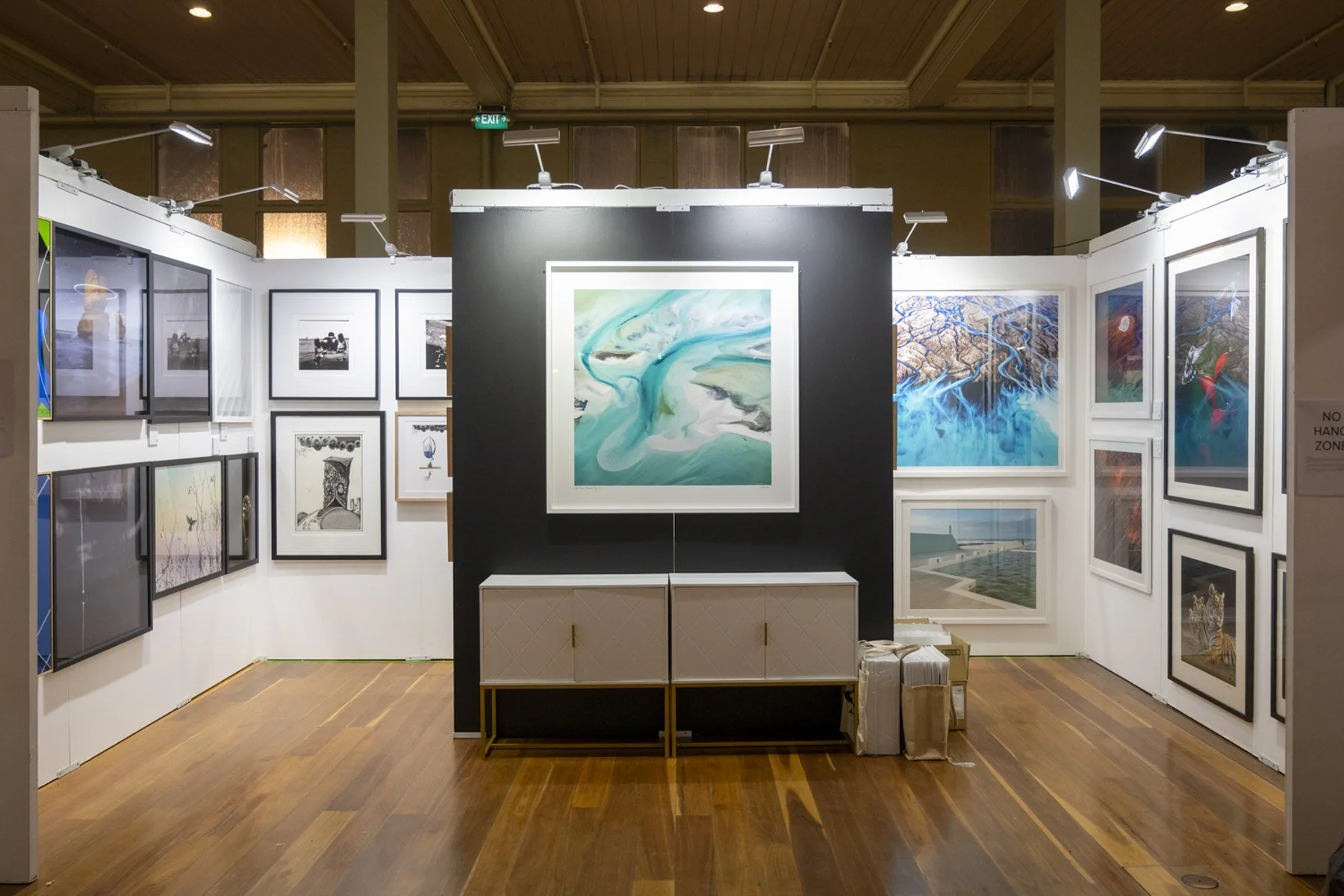
Then the space itself. Stand A7. Three bare walls, a timber floor, and a decision to make about every square metre.
A stand is a room you have for four days, and it has to do contradictory things at once. It has to stop someone mid-stride in a crowded aisle, hold them long enough to look, let the work breathe, then move them through without it feeling like they were moved. Hang it wrong and even strong work turns to noise, every piece shouting over the one beside it.
We made two decisions and committed to them.
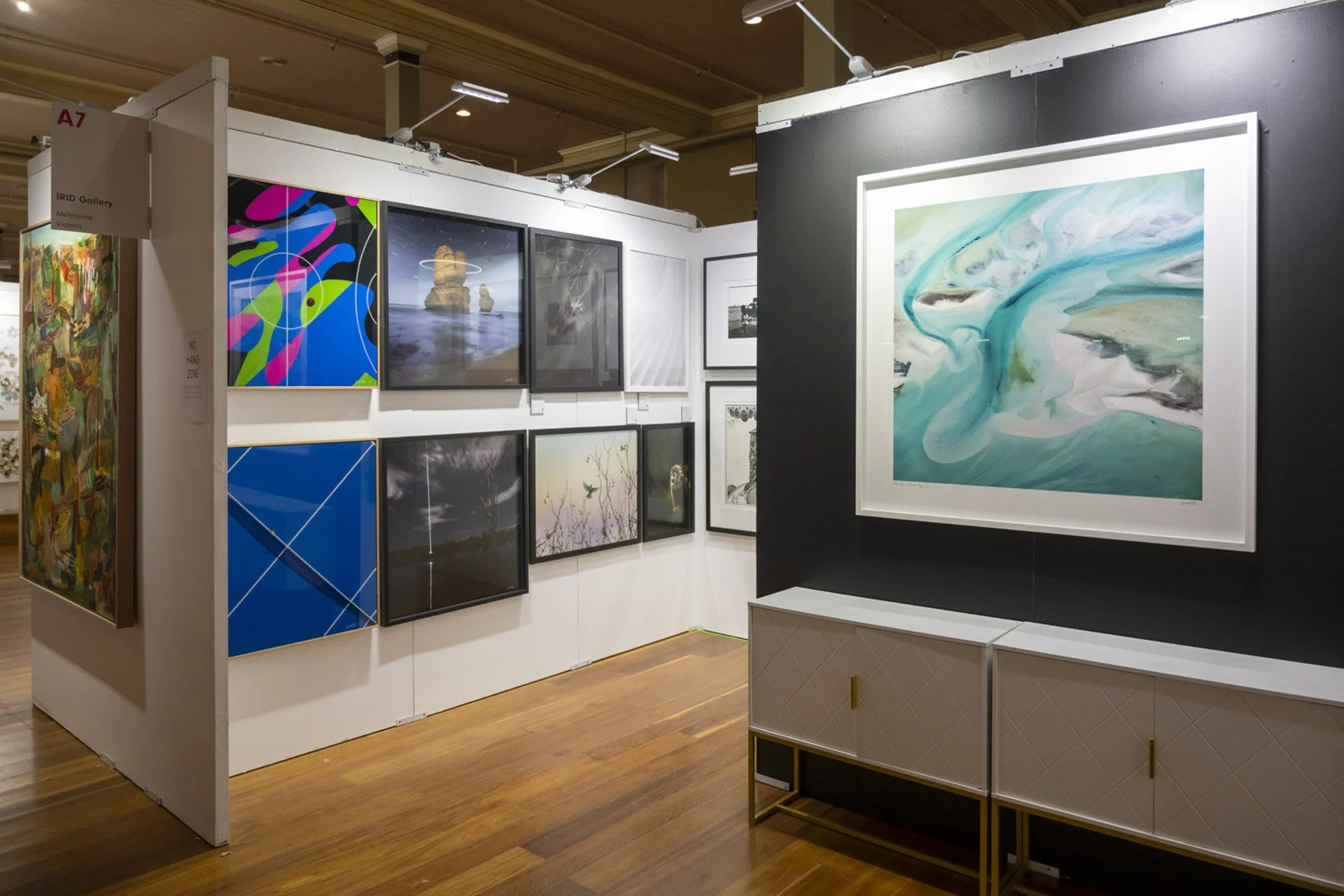
The first was a black feature wall, against every instinct of the white-cube default, carrying one large work alone: Dani Watson's The Tree, an aerial of pale turquoise water and sandbank at Shark Bay, floated in a white frame above a low cabinet and lit so the black wall feels like a room inside the hall. The same image starts at $1,800 in the shop, unframed at 51 cm. It is what you catch from down the aisle before you can see anything else. Everything else on the stand serves that one wall earning the three seconds it takes a stranger to decide whether to turn in.
The second was a walk-through storage area built into the stand itself. Partly that is logistics: work has to live somewhere, and swap in and out as pieces sell. It also changes how people travel through the space. The best conversations at a fair are the ones where you can reach behind you and produce the thing. When a collector is interested, we can say "let me show you something else" and have it in our hands a moment later.
The best conversations at a fair are the ones where you can reach behind you and produce the thing.On the storage wall
On layout, we took the fair team's advice almost every time. They had watched a hundred stands go up.
The gamble we couldn't call in advance
Standing in that hall at five, with the work still wrapped, we could not know whether the mix would hold.
Our photographers look nothing like one another. Dani Watson's conceptual and aerial work hangs within sight of Simon Ray's coast. Guy Little's photographs and ink drawings sit across from the wildlife of John Wiseman and Gianluca Carretta. A hummingbird stopped mid-air beside a dense, patient drawing. A pale sheet of tidal water beside a creature photographed close enough to meet its eye. On one wall, Simon's Flow hung above Newcastle Ocean Baths: blue channels braiding through brown ground, seen from the air, over a pool seen from its own concrete edge.
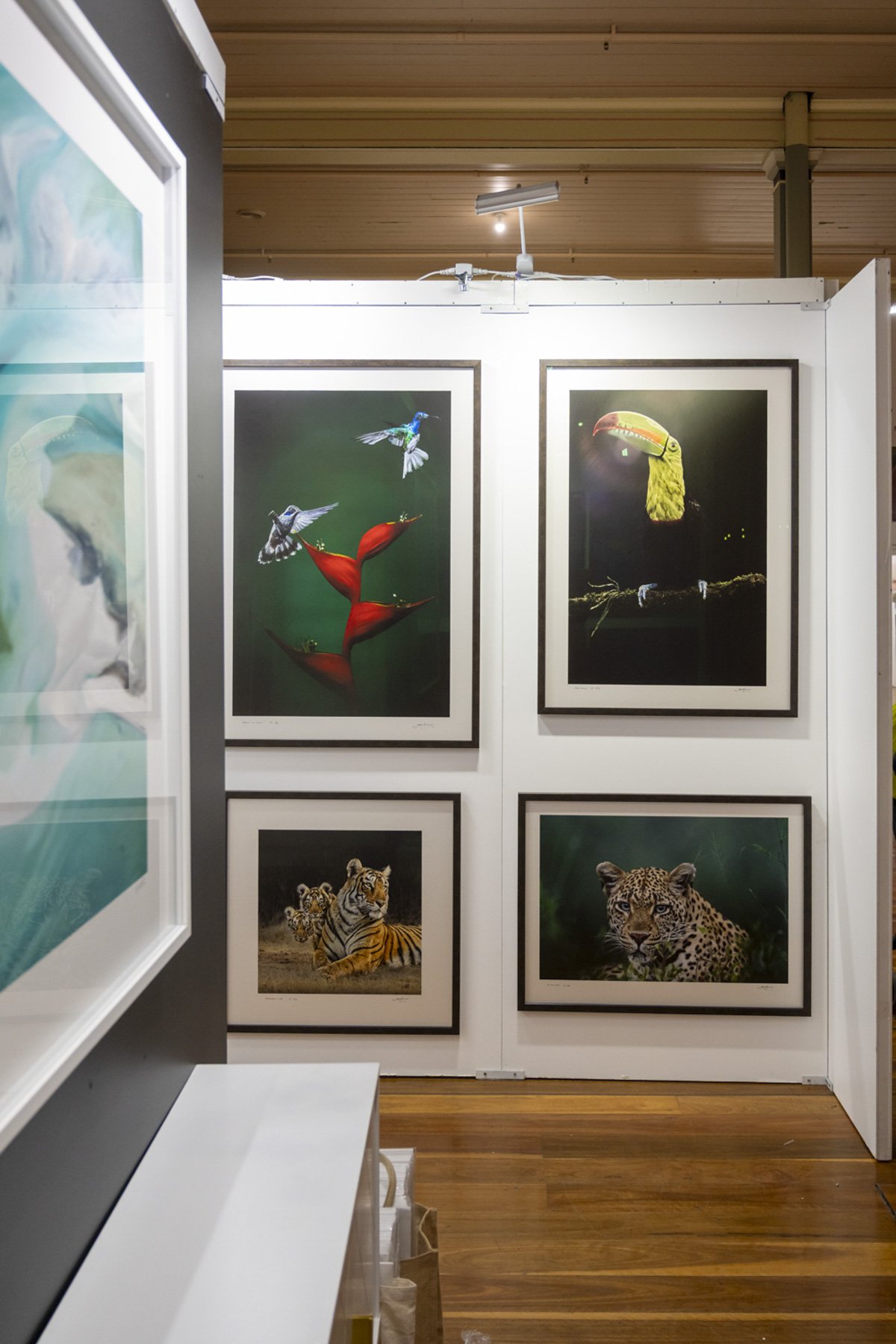
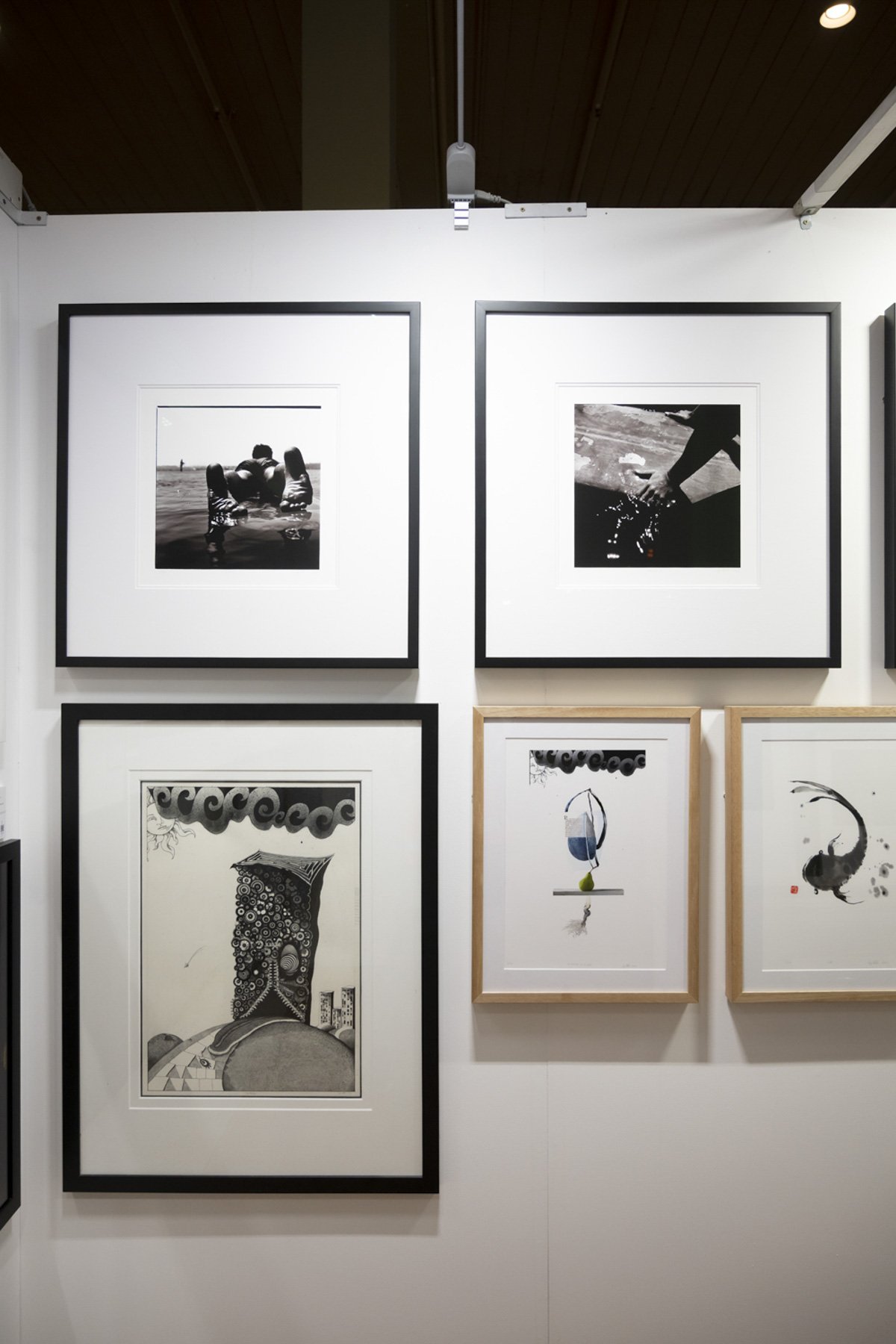
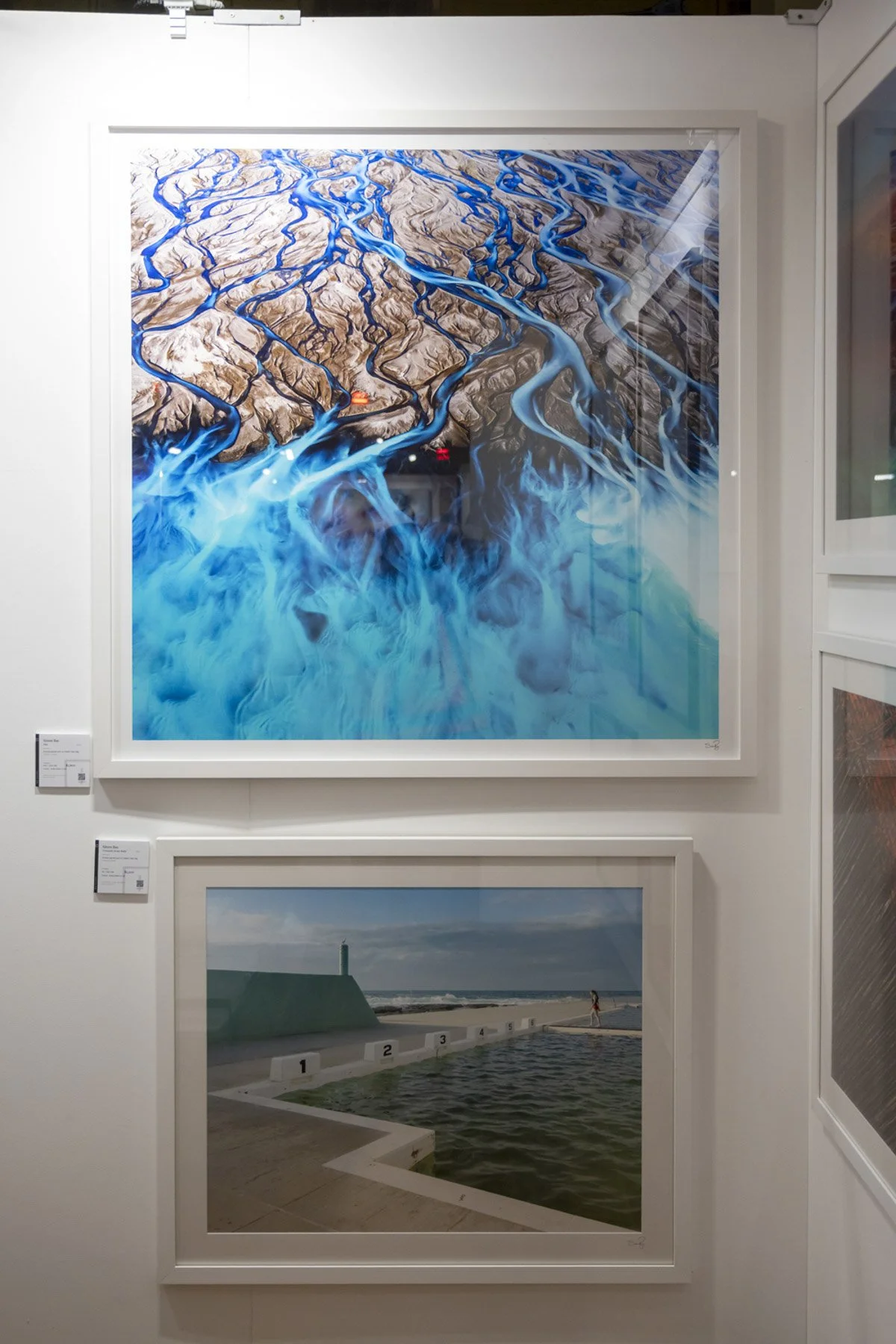
Spread across our website and our exhibitions, that range is what IRID is for. Compressed onto one small stand, it was a risk: a wall of unlike things can look like indecision.
We bet that difference, hung with care, would make people compare. You stand between a drawing and an aerial and something in you starts working out why they are both here. That working-out is the beginning of looking.
If you photographed something on the stand
It is online, where we said it would be. Every work we hung is online with its edition and its price. The 102 cm print of The Tree from the black wall is in the shop, $4,000 framed and $3,300 unframed, and it also comes at 51 and 76 cm. Flow is an edition of 100, from $700 as a 63 × 63 cm print on Canson Platine Fibre Rag, and it runs to 101 cm if the wall can take it. John Wiseman's hummingbirds, photographed in Ecuador, are in the shop too: Emerald Dancer is an edition of 30, from $1,050. Guy Little's photographs start lower. Abyss, from 1988, is $475 as an A3 print.
For anything else you saw, start on the photographer's page, or send us the photo from your phone and we will tell you which work it is and where its edition stands. Nothing is printed until it is ordered, which is why we can't take a print back because you have changed your mind; shipping and returns covers delivery and damage.
Then the last of the bubble wrap came off, the lights came up on the black wall, and the doors opened.
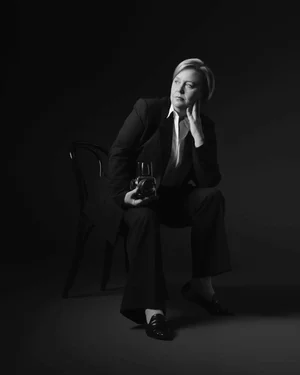
IRID Gallery represents contemporary Australian photographers Dani Watson, John Wiseman, Simon Ray and Guy Little, and publishes every work as a signed, numbered limited edition with a certificate of authenticity. Directed by Dani Watson.
Saw something by Dani Watson, John Wiseman, Simon Ray or Guy Little on stand A7? It is online now, with its edition and its price, and a photo from your phone is enough for us to find it.
